
Data on the Quad Cities available workforce
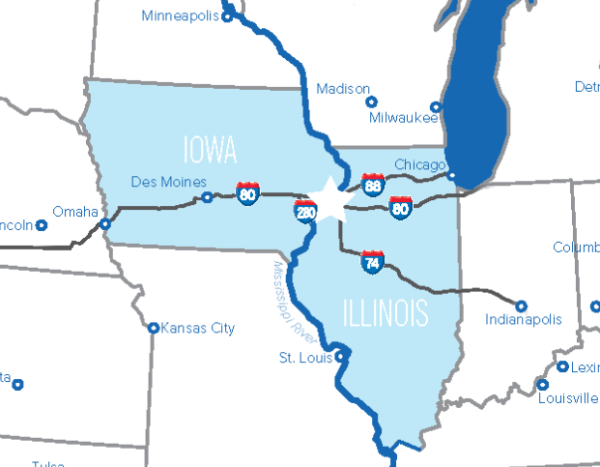
A laborshed analysis, conducted by Iowa Workforce Development every two years, helps identify pockets of labor not easily identified elsewhere. Laborshed data is collected within the geography of the commuting pattern of our QC region and not restricted by county or state lines, providing a more accurate estimate of potential labor.
Highlights
- Total estimated labor force ages 18-64 is 564,090
- Average commute is 14 miles and 19 minutes
Employed
- 32% of those currently employed are likely to accept a new job opportunity, and 30% are actively seeking employment.
- Nearly 193,000 employed individuals indicated they are likely to change employment.
- Of the employed likely to change employment, nearly 75% have an education beyond high school and they are willing to commute 36 minutes one-way to work.
Top five industries for employed workers
- Manufacturing (17% or 103,955)
- Wholesale and retail trade (15% or 89,365)
- Healthcare and social services (14% or 79,638)
- Transportation (10% or 60,185)
- Education (9% or 52,282)
Non-employed
- 67% of those unemployed are likely to accept employment and 59% are actively seeking work.
- Nearly 80% of the unemployed have an education beyond high school and they are willing to commute 34 minutes one-way to work.
- 58% of homemakers and 31% of retirees are likely to accept employment.
Regional analysis is based on aggregated data from the laborshed studies for Clinton and Muscatine Counties in Iowa, and the Iowa/Illinois Quad Cities.
Read more about the QC laborshed area, the available workforce and workforce characteristics in the executive summary of the QC Laborshed Workforce Report pdf below.

Contact
Chris Caves
Vice President, Business Retention & Expansion, Workforce - Grow Quad Cities
Click to View Email