Manufacturing 4.0 Workforce Innovations Grant for companies with 76-250 employees were recently awarded by the Iowa Economic Development Authority (IEDA), including one to a manufacturer in Clinton County. IEDA is encouraging manufacturers to contact their local legislators and ask them to advocate for future funding, as the grant application closed Dec. 31, 2021.
IDEA continues to accept applications for the Manufacturing 4.0 Technology Investment Grant program for small- and medium-sized manufacturers with 3-75 full-time employees.
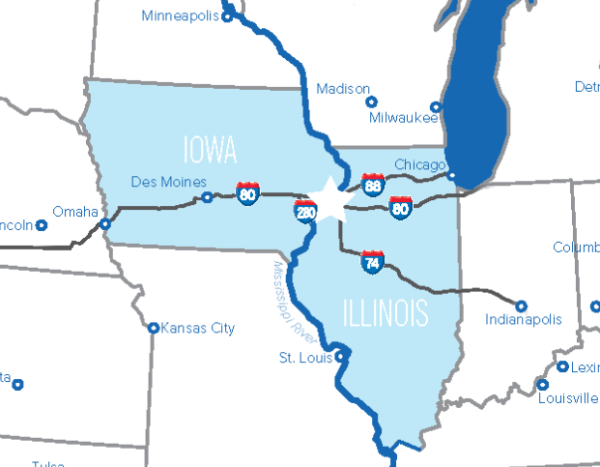
The Illinois Defense Network (IDN) continues to work with communities in Illinois that play a significant role in the state’s defense manufacturing industry. IDN partners include the Quad Cities Chamber, UIC Voorhees Center, IMEC and three additional economic development organizations representing the Rockford, Chicago and Greater Peoria regions.
QC manufacturers continue to accept student apprentices for CNC and welding opportunities. The Quad Cities is on track to place 80-100 student apprentices this year.
Drawbacks
Every manufacturer is experiencing workforce challenges. Different perspectives about where to find the prospective labor pool is challenged by a popular webinar, Iowa Workforce Skirmishes, presented by Ron Cox, Director of CIRAS. This provocative presentation outlines Cox’s research on population growth, migration trends, labor participation rates, community comparisons, and trends and strategies for employing more citizens from unique populations that are not currently represented in our labor pool. This presentation challenges traditional assumptions about our declining workforce numbers.
Is it a supply issue or a chain issue? Many manufacturers are demonstrating very savvy skills in locating raw materials using multiple providers. The challenges come in the form of freight costs, lead times, and quantities. If manufacturers could rely on shipping schedules, they would ramp up the workforce to manage demand. If manufacturers ramp up workforce numbers, they may find themselves in a tough spot when raw materials are delayed, and production is at a standstill. Both elements of a thriving ecosystem are challenged at present, and it will likely take all of 2022 to remedy.
Without higher production outputs, manufacturer growth is flat and it becomes challenging to map out long-term strategic plans with so much market and labor volatility. Advanced manufacturing technologies can improve productivity with limited labor assets. The challenge is the financial investment and training required with new technologies. Manufacturers are wrestling with these decisions and weighing their options for a measurable rate of return on their investments.